
Bee Swarm Simulator Blue Hive Guide (Blooms Update) – Full Progression
In Bee Swarm Simulator, blue pollen is widely considered the best pollen type for early and mid progression, especially after the Blooms update. The main reason is consistency. Blue hives can generate stable honey income even without expensive boosts, high-end gear, or perfect bee equips.
Unlike red or white builds, blue relies heavily on balloons, bubble mechanics, and passive honey generation. This means you can farm efficiently even while macroing or playing without constant boosting. For many players, this makes blue the safest and most reliable first endgame direction.
Early Blue Hive
When To Start Blue Hive
You should start thinking about switching to Blue around:
38–40 bees
Best moment to fully switch:
When you unlock SSA (Supreme Star Amulet)
Especially if you get Pop Star.
Important!
Don’t switch to a Blue Hive before this stage, because it can slow down your progression and reduce your quest completion efficiency. Try to complete as many quests as possible while playing a mixed hive. Blue hives cannot farm red pollen efficiently.
Early Blue Mythic Alternatives
Until you can afford Mythics, use:
✔ Frosty Bee
✔ Bubble Bee
These help with:
- Blue pollen support
- Bubble synergy
- Early honey farming
First Major Early Blue Upgrade
Once you get more honey:
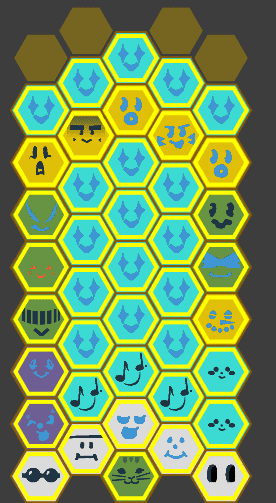
➡ Replace Frosty Bee → Diamond Bee
Your farming can increase dramatically after this swap.
Early Blue Goals
- Get SSA
- Start building Buoyant + Tadpole core
- Slowly replace temporary bees
- Save honey wisely
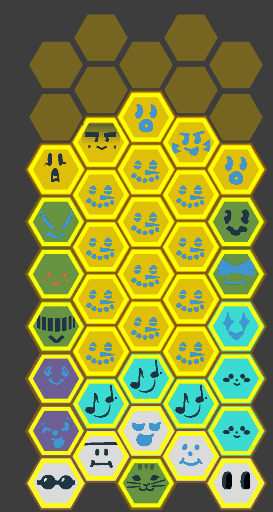
Example Early Blue Hive (38–45 Bees)
Mid Blue Hive
Mid Blue starts when you have:
- SSA
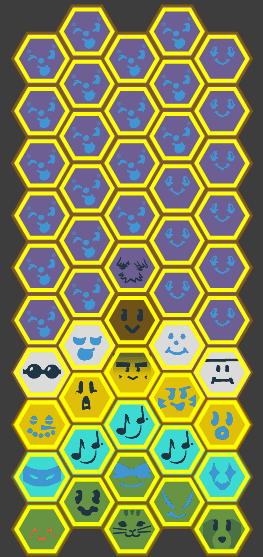
- Some Buoyant Bees
- Some Tadpole Bees
Example Mid Blue Hive
Late Game Blue Hive
Late Blue is pure optimization.
Focus on:
- Double Passive SSA
- Full Gifted Hive
- Best Bee Equips
- Full Mutations
- Nectar Stacking
Best Passive Combos from guide:
Pop Star + Star Shower
Pop Star + Guiding Star
SSA 5/5 — Why Its important
From the guide, SSA is one of the most important parts of Blue Hive.
Perfect SSA stats:
- Capacity
- Blue Pollen
- Convert Rate
- Bee Ability Rate
- Critical Chance
- Pollen
Late Blue
5/5 becomes very important for max honey.
Because Blue Hive scales heavily with:
- Capacity
- Convert
- Ability spam
Tide Popper — When To Buy
If you are staying Blue permanently:
➡ Buy Tide Popper
If you plan to switch later:
🔴 Red Hive then Save for Scythe
⚪ White Hive then Save for Gummy Baller
If you plan to switch colors:
Dont buy Tide Popper
Hive Progression Table
| Stage | Bees | SSA Target | Main Focus |
|---|---|---|---|
| Early Blue | Frosty / Bubble → Start Mythics | Pop Star | Start balloon farming |
| Mid Blue | Buoyant + Tadpole Core | Strong Pop Star | Hive optimization |
| Late Blue | Full Meta Hive | 5/5 SSA + Double Passive | Maximum honey output |
Blue Hive Core Ratios
Typical Ratio:
➡ Around 2 Buoyant : 1 Tadpole
Examples:
- 16 Buoyant / 11 Tadpole
- 18 Buoyant / 9 Tadpole
Important Blue Hive Rule
Blue Hive is not one-size-fits-all.
You must adjust based on:
- Backpack fill speed
- Honey generation
- Macro style
- Alt accounts
FAQ – Blue Hive Guide
When should I start Blue Hive?
Around 38–40 bees.
Best after getting SSA.
Can I play Blue without Mythics?
Yes. Use Frosty + Bubble early.
When do I replace Frosty Bee?
When you get more honey → replace with Diamond Bee.
Is 5/5 SSA required?
Yes. In Late game
Should I rush Tide Popper?
Only if you stay Blue permanently.
What if I plan switching hive color later?
Skip Tide Popper.
Save for Scythe or Baller.
What is more important — Bee Equips or Mutations?
Guide states:
➡ Bee Equips are more important.
Why Blue needs many Buoyant Bees?
They generate balloons → main honey source.
Writers tip:
As an experienced Bee Swarm Simulator player, I recommend starting with a Blue Hive. You don’t need expensive boost resources to farm — you can simply macro and still make strong progress.
In my opinion, going early Red Hive is a mistake because it slows down your progression and requires much more time and resources. While an early Blue Hive can realistically reach level 20 bees in around 2–3 months, early Red usually takes significantly longer.